Music Theory
A complete guide to Indian classical music — from swaras and ragas to tala, flute technique, and essential listening.
What is Indian Classical Music?
Indian classical music is one of the world's oldest living musical traditions, with an unbroken lineage stretching back over 2,000 years. Unlike Western classical music, it is primarily an oral tradition passed from teacher (guru) to student (shishya) through direct instruction. It is built on two fundamental elements: raga (melodic framework) and tala (rhythmic cycle).
There are two main streams, shaped by geography and history: Carnatic music from South India, and Hindustani music from North India. Both share the same ancient roots but evolved into distinct, rich systems over a millennium.
Two Ancient Traditions
| Aspect | Carnatic | Hindustani |
|---|---|---|
| Region | South India (Tamil Nadu, Kerala, Karnataka, Andhra) | North India, Pakistan, Bangladesh |
| Scale System | 72 Melakartas (parent scales) | 10 Thaats (parent scales) |
| Main Form | Kriti (composition-centred) | Khayal (improvisation-centred) |
| Swaras | Sa Ri Ga Ma Pa Dha Ni | Sa Re Ga Ma Pa Dha Ni |
| Drum | Mridangam | Tabla |
| Ornaments | Gamaka (continuous oscillation) | Meend (glide), Murki (rapid grace) |
| Film Connection | Tamil / Telugu / Kannada cinema | Bollywood / Hindi cinema |
| Flute | Venu / Carnatic flute | Bansuri |
| Key Figures | Tyagaraja, Muthuswami Dikshitar, Syama Sastri | Tansen, Bade Ghulam Ali Khan, Ravi Shankar |
The 7 Swaras (Notes)
Indian music uses 7 primary notes called swaras. Together they form the saptaka (octave). Two of them — Sa and Pa — are fixed and never altered. The other five can each appear in multiple variants (komal/shuddha/tivra), giving 12 notes total across one octave.
All 12 Notes — Complete Reference
| # | Carnatic Name | Abbrev | Hindustani | Western (C = Sa) |
|---|---|---|---|---|
| 1 | Shadja | S | Sa | C |
| 2 | Shuddha Rishabha | R1 | Komal Re | C# |
| 3 | Chatushruti Rishabha | R2 | Shuddha Re | D |
| 4 | Sadharana Gandhara | G2 | Komal Ga | Eb |
| 5 | Antara Gandhara | G3 | Shuddha Ga | E |
| 6 | Shuddha Madhyama | M1 | Shuddha Ma | F |
| 7 | Prati Madhyama | M2 | Tivra Ma | F# |
| 8 | Panchama | P | Pa | G |
| 9 | Shuddha Dhaivata | D1 | Komal Dha | Ab |
| 10 | Chatushruti Dhaivata | D2 | Shuddha Dha | A |
| 11 | Kaishiki Nishada | N2 | Komal Ni | Bb |
| 12 | Kakali Nishada | N3 | Shuddha Ni | B |
Three Octaves
Ragas — The Soul of Indian Music
A raga is not just a scale. It is a complete melodic personality — a living organism with its own rules for how notes are approached, emphasised, ornamented, and sequenced. Two ragas can use the exact same set of notes and sound completely different because of phrasing, emphasis, and the treatment of individual notes.
8 Essential Ragas to Know
Joyful, auspicious, bright — pentatonic raga often used for invocations and concert openers. No Ma or Dha.
Romantic, serene, sweet — pure pentatonic major scale. One of the most universally loved ragas.
Majestic, romantic, expansive — the "golden" raga. Uses tivra Ma (sharp 4th), giving it a luminous quality.
Melancholic longing, deep emotion — the "yearning" raga. Komal Ga and Ni give it that characteristic ache.
Bittersweet, all-embracing, farewell — traditionally the last raga of any concert. Uses all komal notes, giving a deeply emotional quality.
Austere, devotional, the raga of dawn. Associated with Lord Shiva. Komal Re and Dha give it a distinctive ancient, spiritual quality.
Calm, romantic, devotional — the first raga taught in Hindustani tradition. Serene and welcoming at dusk.
Deeply meditative, haunting, midnight — only 5 notes (pentatonic minor). No Re or Pa. One of the most powerful ragas in the repertoire.
Tala — The Rhythmic Cycle
A tala is a fixed, repeating cycle of beats — the rhythmic backbone of every composition. Every piece of Indian classical music is anchored to a tala. The first beat of each cycle is called sam (pronounced "sum") — the moment of musical resolution and reunion.
You cannot play music without being inside a tala. It is the heartbeat. While playing flute, keep tala by tapping your foot on the sam, then internalise the subdivisions until the cycle feels as natural as breathing.
Carnatic Talas
Hindustani Talas
In Hindustani notation: X = sam (gold), ∅ = khali (empty beat — wave of hand). The sam and khali pattern gives each tala its distinctive character.
Carnatic Music — Deep Dive
Carnatic music is a highly systematised tradition. Every aspect — from the parent scales to the ornaments to the composition forms — is precisely codified, yet the music breathes with spontaneous life and devotion.
The 72 Melakarta System
Carnatic music organises all possible seven-note parent scales into a mathematical system of 72 melakartas. Every raga descends from one of these parent scales.
5 Key Melakartas
Gamaka — The Art of Ornamentation
Gamaka is what separates Carnatic music from merely playing the right notes. It is the art of embellishing, oscillating, and breathing life into each swara. For flute players, gamaka is achieved through breath control, finger technique, and embouchure.
Composition Forms
Ragas in Your Collection
These are the ragas present across your 84 handwritten sheets — sorted by number of pieces.
Hindustani Music — Deep Dive
Hindustani classical music evolved in North India under the influence of Persian and Mughal court culture. It places supreme value on improvisation — a skilled performer can sustain a single raga for hours, exploring its every nuance.
The 10 Thaats (Bhatkhande's System)
Pandit V.N. Bhatkhande organised all Hindustani ragas under 10 parent scales called thaats (similar to Carnatic melakartas, but the system is less comprehensive).
| Thaat | Key Notes | Character | Carnatic Equivalent |
|---|---|---|---|
| Bilawal | All shuddha | Pure, serene | Shankarabharanam |
| Kalyan | Tivra Ma | Luminous, evening | Mechakalyani |
| Khamaj | Komal Ni | Romantic, pleasing | Harikambhoji |
| Bhairav | Komal Re, Komal Dha | Austere, morning | Mayamalavagowla |
| Bhairavi | All komal | Farewell, bittersweet | Hanumattodi |
| Kafi | Komal Ga, Komal Ni | Melancholic, midnight | Kharaharapriya |
| Asavari | Komal Ga, Komal Dha, Komal Ni | Serious, morning | Natabhairavi |
| Todi | Komal Re, Komal Ga, Tivra Ma, Komal Dha | Intense, morning | Shubhapantuvarali |
| Poorvi | Komal Re, Tivra Ma, Komal Dha | Devotional, sunset | Kamavardhini |
| Marwa | Komal Re, Tivra Ma, no Pa | Restless, evening | Gamanashrama |
Performance Structure
The Gharana System
A gharana is a school or lineage of musicians — a family of artistic inheritance. Different gharanas teach the same ragas but with distinct styles, emphasis, and philosophy. The Jaipur gharana emphasises pristine raga grammar. The Kirana gharana is known for its sustained, meditative alap. The Gwalior gharana is considered the oldest of the modern gharanas.
The Flute — Venu & Bansuri
- 8 holes (1 blowing hole + 7 finger holes)
- Held vertically or at an angle
- Cross-fingering for all 12 notes
- Gamaka achieved through breath and fingering
- Masters: T.R. Mahalingam, N. Ramani, Shashank Subramanyam
- 6 holes (1 blowing hole + 6 finger holes)
- Transverse — held horizontally
- Bamboo · warm, breathy tone
- Meend (glide) is central technique
- Masters: Pt. Hariprasad Chaurasia, Rakesh Chaurasia
Which Bansuri to Buy
Anatomy of the Bansuri
Embouchure — Making Your First Sound
Blow across the hole, not into it. Imagine you are blowing out a candle that is sitting to your right — your breath travels sideways, not straight ahead. Rest the flute's edge on your lower lip. Cover about 1/3 of the blow hole with your lower lip. Direct your air stream at the far edge of the hole.
Bansuri Fingering Chart
| Swara | H1 | H2 | H3 | H4 | H5 | H6 | Western |
|---|---|---|---|---|---|---|---|
| Sa | ● | ● | ● | ● | ● | ● | C (or tonic) |
| Re | ○ | ● | ● | ● | ● | ● | D |
| Ga | ○ | ○ | ● | ● | ● | ● | E |
| Ma | ○ | ○ | ○ | ● | ● | ● | F |
| Pa | ○ | ○ | ○ | ○ | ● | ● | G |
| Dha | ○ | ○ | ○ | ○ | ○ | ● | A |
| Ni | ○ | ○ | ○ | ○ | ○ | ○ | B |
| Komal Re | ◑ | ● | ● | ● | ● | ● | C#/Db |
| Komal Ga | ○ | ◑ | ● | ● | ● | ● | Eb |
| Tivra Ma | ○ | ○ | ◑ | ● | ● | ● | F# |
| Komal Dha | ○ | ○ | ○ | ○ | ◑ | ● | Ab |
| Komal Ni | ○ | ○ | ○ | ○ | ○ | ◑ | Bb |
● = closed · ○ = open · ◑ = half-covered (for komal/flat notes)
Practice Tips
- Tone first, always. Spend your first 10 minutes just making beautiful, steady Sa. Everything else follows from tone.
- Daily riyaz (practice) matters more than long sessions. 30 minutes every day beats 3 hours once a week.
- Always practice with a tanpura drone — it trains your ear to stay in tune and internalises the feeling of Sa.
- Sing what you play. If you can't sing it, you can't truly play it. Indian music is vocal at heart.
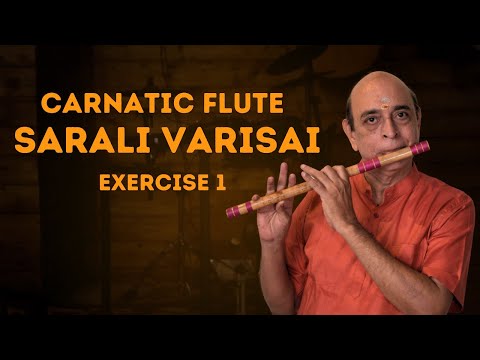
- Learn sarali varisai (scale exercises) before songs. These are the foundation of all Carnatic flute training.
The Flute Masters
Listen — Hear It for Yourself
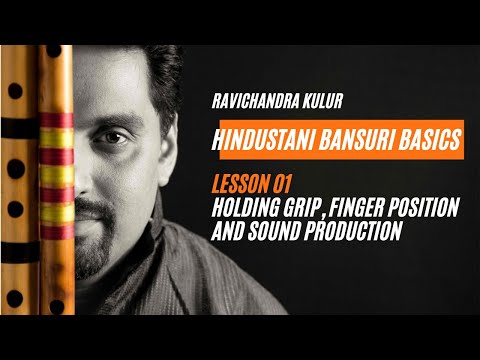
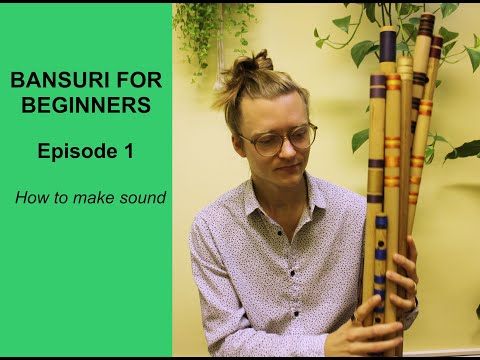
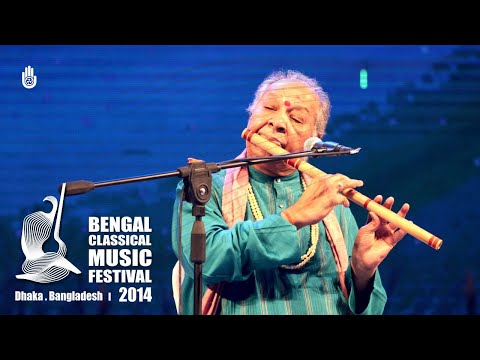
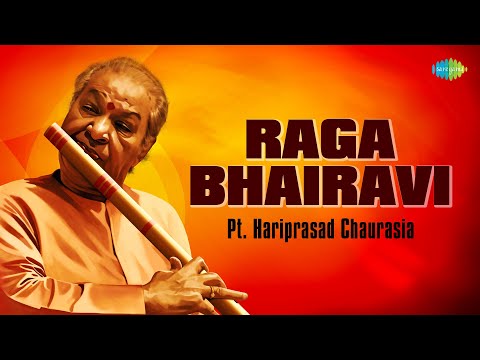
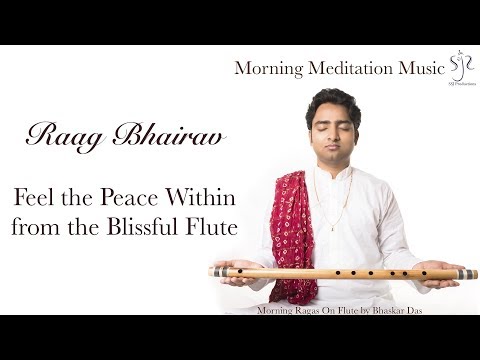
Music theory only makes sense once you can hear it. Every concept in this guide comes alive through listening. Click any card to watch directly on YouTube.
Start Here — Foundations




Flute — Watch & Learn

Ragas — Listen to Each One





Tala — Count Along

Deep Dives